We help retail teams close the gap between the technology they have invested in and the results they were hoping for. We do that by working on purpose, people and process together.
The technology arrived as promised. The people in stores quietly work around it.
The pilot went well. Somehow the value never grew beyond it.
The consultants were good. No one stayed to help make it real.
The retailer trying to make the investment stick. The partner trying to make the technology land. We work with both. Differently.
MIT's State of AI in Business 2025 study found that ninety-five per cent of enterprise generative AI pilots delivered no measurable return. By January 2026, Gartner reported at least half of generative AI projects abandoned after proof of concept, for reasons that are organisational, not technical. The technology usually worked. The organisation around it was never set up to use what it could do.
Earlier waves of retail technology could mostly be bolted on. A new POS, a loyalty platform, an app. AI is different. It changes how the organisation decides, who it trusts with those decisions, and how the work gets done. That is a human question long before it is a technical one.
Most of the technology sitting unused in stores is good technology. It was installed, switched on, and then worked around.
Strip away the change-management jargon and this is what is left. Each question has a model behind it. Together they are the Readiness Stack.
CLEAR and GRIT are the foundations. ReFRAME is the engine that runs on them. A retailer strong in two and broken in one still ends up with unused technology, which is why we read across all three.
The free Readiness Diagnostic gives you a view of where you stand across the three pillars: what is holding up well, what is fragile, and where to start. You keep the results either way.
Three pillars · Personalised results · Free
The organisations that see real value are the ones that changed how they work, not the ones that bought better tools.
We would rather not arrive, diagnose and disappear. We stay through the implementation, the adoption, and the moments when the first version does not quite work. The engagement ends when the capability belongs to your team, not when the contract expires.
We have stood on the store floor before the executive team arrived, and sat in meetings where the pilot results looked promising and no one was quite sure what came next. We built some of the approval processes we now help organisations take apart.
 Roles from the shop floor to CEO
 Retail clients across four continents
 Two of the world's ten largest companies as clients
 We wrote the book on it: Retail Innovation Reframed
This book is a how-to guide for retailers to learn how to transform their business and create real value for the customer.
Retail Innovation Reframed brings purpose back to the innovation agenda.
A practical and easy to consume way for retailers to move from customer obsession to purpose-led.
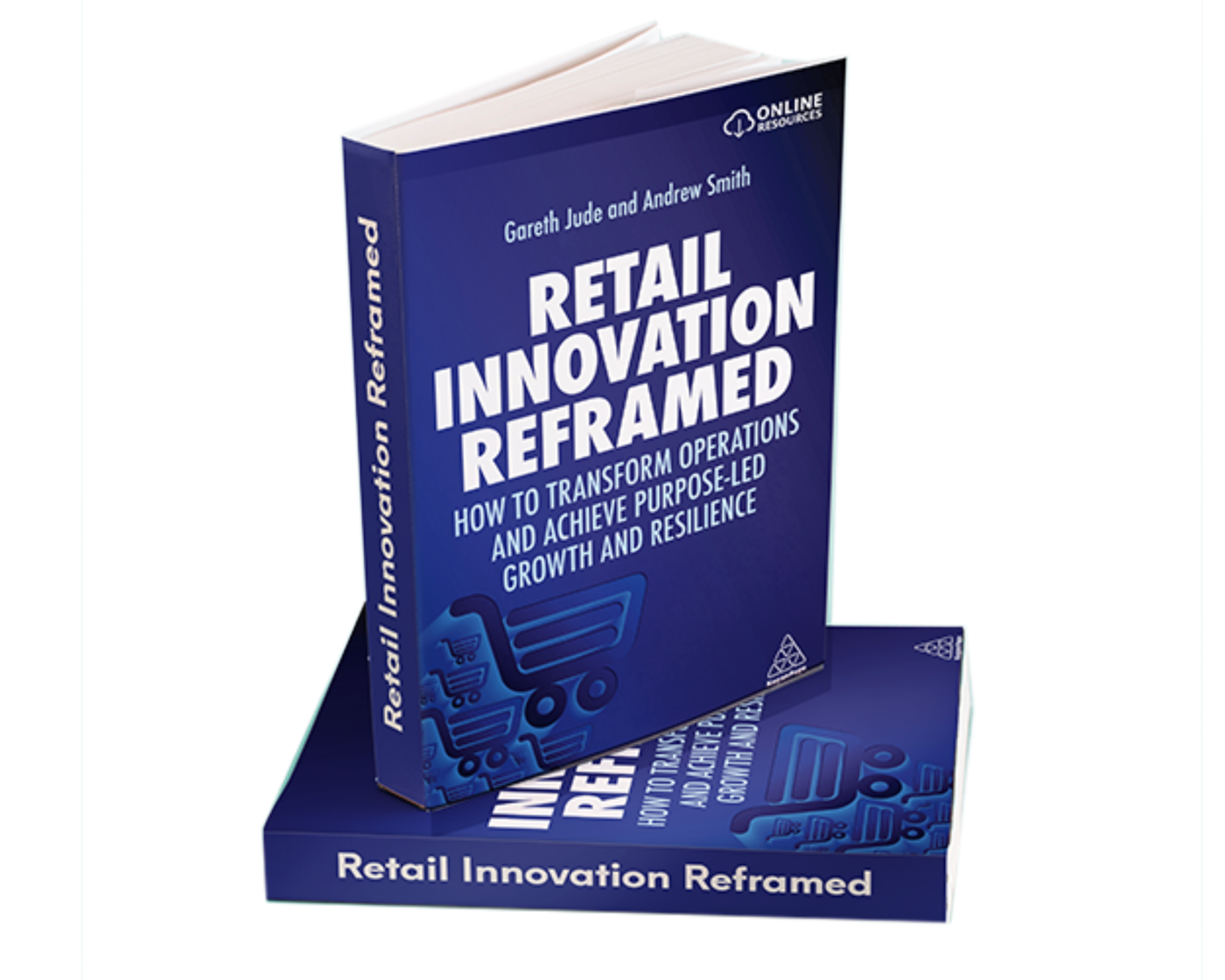
The book the Readiness Stack grew out of. Written with Gareth Jude and published by Kogan Page, it is the thinking these frameworks came from, written for the people who actually have to make change happen in stores.
Read about the book →It does not need to be a fully formed problem statement. "Something is not working and we cannot name it" is a perfectly good place to begin. If we are not the right people to help, we will say so.
hello@thinkuncommon.com